
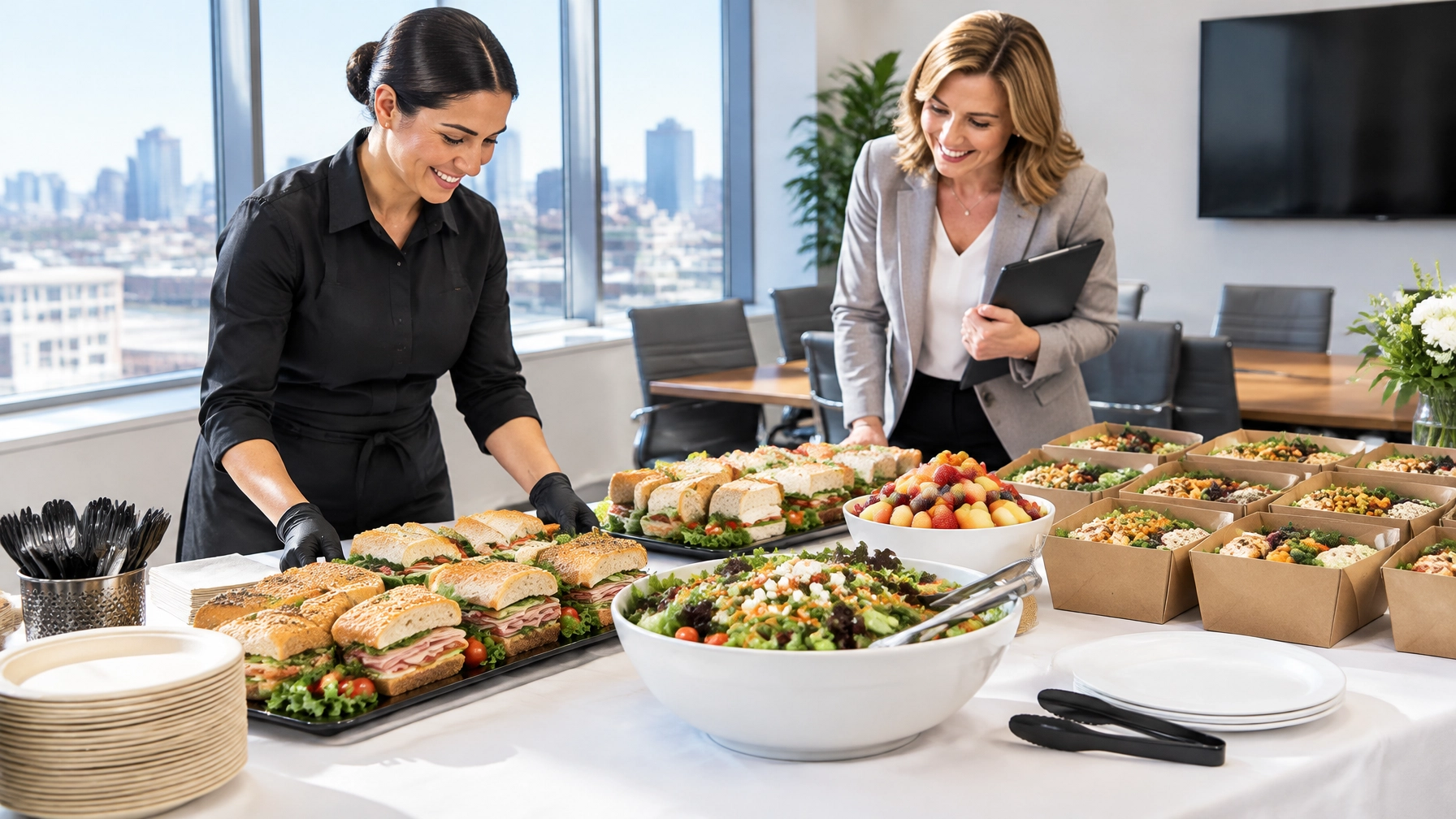
The easiest way to plan corporate lunch catering is to settle four things first: how many people are coming, what meal format suits the occasion, which dietary needs must be covered, and who will receive and set up the food. Once those are clear, the menu and delivery details are much easier to manage.
For a working meeting, individually packed meals can keep things moving. For a team celebration, a buffet or sandwich spread gives people more choice. Below is a practical guide to choosing a format, estimating portions, and making sure lunch arrives ready to serve.
Pick a format that fits the group
The right choice depends on more than headcount. Consider whether everyone will eat at the same time, how much room you have, whether guests need to carry meals back to their desks, and how much setup you want to handle.
| Group size | Formats to consider | A good fit when… |
|---|---|---|
| 2–10 people | Boxed lunches or a small sandwich platter | You have a working meeting or limited table space. |
| 10–25 people | Boxed lunches, sandwich platters, or a simple buffet | You want options without an elaborate setup. |
| 25–50 people | Buffet or a mix of sandwich platters and sides | People can serve themselves and mingle or take breaks in shifts. |
| 50+ people | Buffet, boxed meals, or BBQ for a casual outdoor event | You need a clear service plan, enough serving space, and possibly staffing. |
These are starting points, not rules. For catering for 25 people, boxes can be convenient if everyone needs an individual meal; a buffet may be easier when the group has a shared break and varied appetites. For catering for 50 guests, plan how the line will move, where dishes will go, and who will help guests find their meals.
Boxed lunches: simple to distribute
Boxed meals work especially well for trainings, pharmaceutical presentations, off-site meetings, and schedules where people may eat at different times. Each guest gets a complete meal, and dietary selections can be identified individually. Creative Catering offers cold, hot, and salad box options, with custom box lunches available upon request. Review the box lunch options when you want to compare formats.
Sandwich platters: easygoing and flexible
Sandwiches, wraps, and salads suit casual lunches and shorter meetings. They’re easy to share and give guests a few choices, but make sure the meal includes enough sides to feel complete. A platter is less convenient if attendees need to grab food individually and head straight into a meeting.
Buffet: variety for a shared break
A buffet is a natural fit for a team lunch or a longer meeting with a scheduled break. A combination of entrées, sides, salad, and bread gives guests options. Ask whether the order includes serving utensils, disposable tableware, warming equipment, setup, or staffing: those details vary by package.
BBQ: best for a more casual gathering
BBQ can be a fun choice for a company picnic or outdoor team event, but it needs more planning than a delivery of boxed meals. Check the location, weather plan, serving space, equipment, and cleanup responsibilities. Explore BBQ catering options for a more relaxed company event.

How much food should you order?
For boxed lunches, a simple baseline is one complete meal per confirmed attendee. Check what each box includes (such as an entrée, sides, dessert, utensils, and beverage) before adding anything extra.
For a shared lunch, ask the caterer to confirm how many guests a tray or package is intended to serve. As a broad planning guide, a typical buffet might include roughly 4–6 ounces of cooked entrée protein per person, plus sides and salad. Sandwiches or wraps are usually planned as one main portion per person, with sides adjusted to the menu and group. These are estimates, not guarantees: a hearty buffet with several sides differs from a lunch centered on sandwiches.
For a group of 25 or 50, don’t simply multiply the same tray count without checking portion yields. Share the headcount, menu, and whether lunch is the main meal with your caterer, then confirm what the recommended package serves. If attendance is uncertain, ask about the final-count deadline and any reasonable buffer before ordering extra.
Make dietary requests clear and manageable
Ask attendees about dietary needs as early as you can, especially for a large meeting or a group that includes visitors. Collect the information in one place and distinguish between preferences, intolerances, allergies, and religious requirements.
Then confirm details with the caterer. Ask what ingredients are in the meal, whether a dietary meal can be packed and labeled separately, and what can be shared about cross-contact precautions. Don’t assume that a dish is allergy-safe or meets a specific religious requirement based on its name alone. Keep special meals together when they arrive and assign someone to hand them to the right guests.
A menu with choices can help reduce last-minute substitutions. For example, include a vegetarian option and consider sides that work for a range of guests. Keep sauces and dressings on the side where practical. If you’re ordering regularly, note recurring preferences so the next order is easier.
Use a simple ordering timeline
For a routine, smaller office lunch, 24–48 hours ahead may be enough if the caterer confirms availability. For 25–50 people, a custom menu, or a date during a busy season, reach out several days in advance. Larger events, staffed service, rentals, and outdoor BBQs benefit from more lead time, often a week or more, depending on complexity.
When you request a quote, include:
- Event date, meal time, delivery address, and estimated headcount
- Meal format and any menu preferences
- Dietary requests and allergy information
- Building access, delivery instructions, and a day-of contact
- Whether you need setup, staff, tableware, beverages, or cleanup help
Confirm the final guest count, menu changes, delivery window, and any service fees or minimums by the caterer’s stated deadline. Exact pricing depends on the menu, headcount, service needs, and event details, so request a current quote rather than relying on a general estimate.

Keep setup and cleanup from becoming your job
A few simple assignments prevent day-of confusion. Name one person to receive the delivery and check it against the order. Make sure they know where food should be placed and when it can arrive. For a buffet, confirm who provides serving utensils, labels, plates, napkins, and warming equipment. Ask in advance what the caterer handles for setup and cleanup, and what your team is expected to do.
If your office orders lunch often, a repeatable process can save time: use a standard headcount deadline, keep dietary requests in one place, and designate a regular delivery contact. Creative Catering offers daily corporate deliveries across New Jersey and corporate house accounts. Its corporate catering service supports everything from small meetings to company-wide events.
Office lunch catering ideas that work for groups
If you’re looking for office lunch catering ideas that are practical as well as crowd-pleasing, start with these:
- Sandwich and wrap spread: Offer a mix of familiar fillings, a vegetarian choice, salad, and chips.
- Hot buffet: Pair two entrée choices with a salad, bread, and a couple of sides for a sit-down team lunch.
- Individually packed meals: Choose cold boxes for a quick meeting or hot boxes when a warm entrée makes sense.
- Taco or themed buffet: A build-your-own option adds variety, but make sure the serving line and dietary choices are clear.
- BBQ picnic: A relaxed option for an outdoor company gathering, with setup and weather planning handled ahead.
These lunch catering ideas can be adjusted for a small meeting or a bigger team. If you’re searching for office catering near me in New Jersey, look for a provider that can confirm delivery coverage, menu options, timing, and the details that matter to your location.
Frequently asked questions
How far ahead should I order corporate lunch catering?
For a small, straightforward order, 24–48 hours may work if the caterer has availability. For larger groups, custom menus, staffing, or rentals, book earlier and confirm the provider’s deadlines.
What’s a good format for catering for 25 people?
Boxed lunches are useful when meals need to be distributed quickly or eaten on different schedules. A buffet or sandwich spread works well when everyone can take a shared break. Choose based on the meeting setup and guest needs, not headcount alone.
How do I plan catering for 50 guests without ordering too much?
Confirm attendance, choose a package designed for the group size, and ask the caterer to explain tray yields and what the meal includes. Don’t add extra trays without checking portion guidance first.
Can a caterer handle dietary requests?
Often, yes, but share requests early and ask specific questions about ingredients, labeling, separate packaging, and cross-contact. Confirm any allergy or religious requirements directly with the caterer before ordering.
For corporate lunch catering in New Jersey, contact Creative Catering at (732) 563-2227 or info@cateringnj.com. The team is based at 83 Main Street, Edison, NJ 08837, and serves events across New Jersey.