Choose sandwich platters when your team can take a shared break and mingle; choose boxed lunches when people need individual meals, predictable portions, or flexible timing. The best option depends on how your meeting runs, not just what’s on the menu.
If you’re weighing sandwich platter catering against box lunch catering for an office meeting, this side-by-side guide can help you make a practical choice.
Sandwich platters vs. boxed lunches at a glance
| What matters | Sandwich platters | Boxed lunches |
|---|---|---|
| Setup time | More arrangement: platters, plates, napkins, serving utensils, and condiments | Simple setup: arrange boxes and label or group them |
| Serving effort | Someone may need to guide the line or refresh platters | Guests pick up their own meal |
| Portion control | Flexible, but guests serve themselves and portions can vary | Each guest gets a pre-portioned meal |
| Dietary needs | Dietary options need clear labels and separation on the table | Individual meals are easier to identify and hand out |
| Food waste | Guests can take only what they want, but estimating demand takes care | Easier to count meals; unopened boxes may remain if attendance changes |
| Cost predictability | Depends on platter sizes, mix, sides, and how much guests take | Easier to plan one meal per person; exact pricing still depends on the menu and order |
| Best for | Shared breaks, team celebrations, and meetings where people can mingle | Trainings, staggered schedules, conference rooms, and off-site presentations |
| Cleanup | Collect plates, utensils, serving pieces, and leftovers | Clear boxes and packaging |
Neither format is always better. Think about when people will eat, where they’ll sit, and how much time you want to spend organizing lunch.
When sandwich platter catering is the better fit
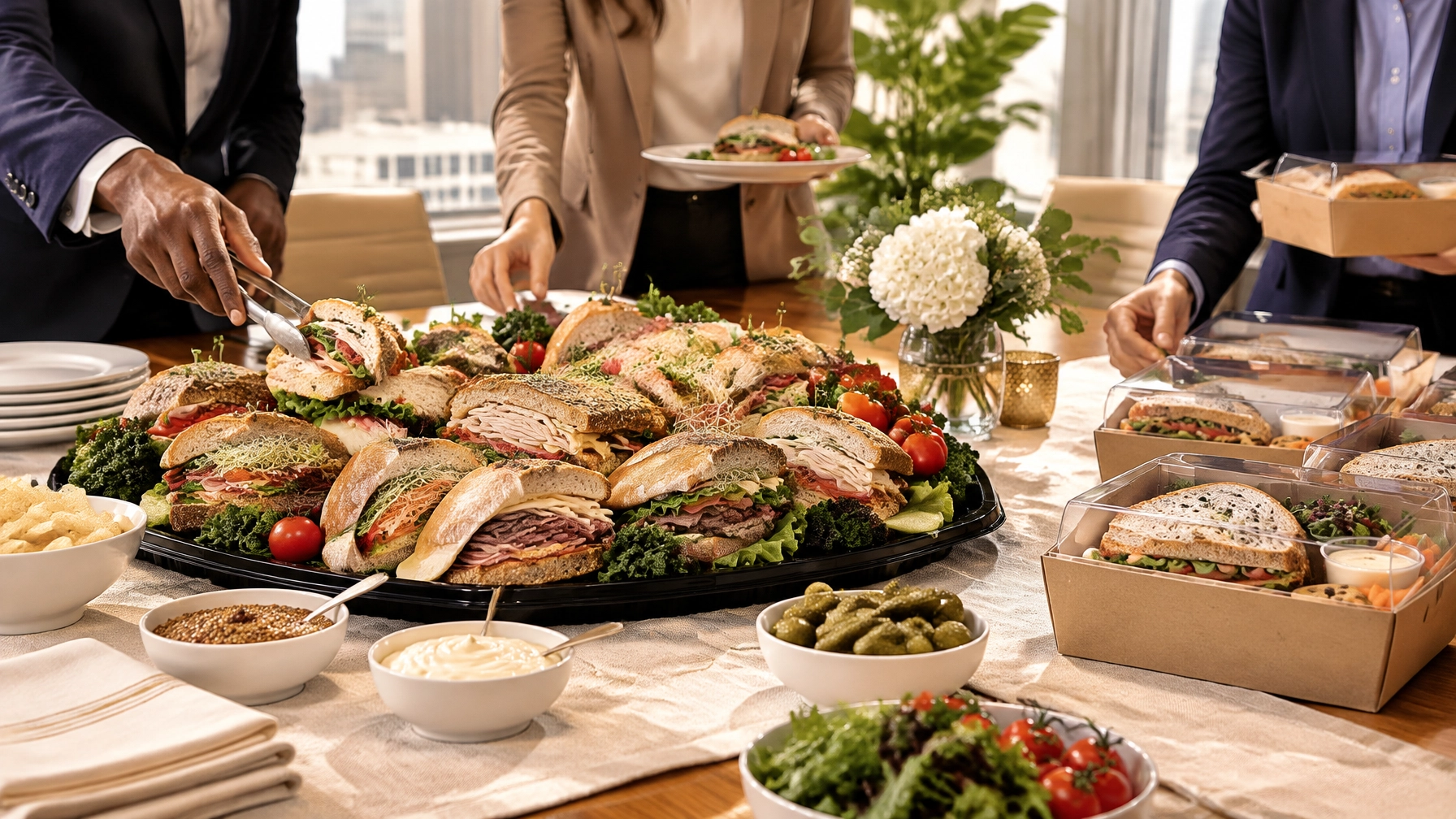
Platters are a natural choice when your group can eat at about the same time and you want lunch to feel social. Guests can sample different sandwiches, chat while they serve themselves, and return for another piece if they’re still hungry.
They’re often a good fit for:
- Team lunches with a shared break
- Department gatherings or informal celebrations
- Client meetings where the group will eat together
- Office events with space for a separate serving table
- Meetings where you’d like a mix of sandwich varieties on display
For sandwich platters for office meetings, set the food on a side table rather than in the middle of a conference table covered with laptops and papers. Provide plates, napkins, serving utensils, and a clear place for condiments. Label each platter with its sandwich varieties and flag common allergens when possible.
Platters also let guests choose what appeals to them. But that flexibility means it can be harder to predict exactly how much of each variety will be eaten. If attendees have dietary needs, arrange clearly labeled options separately and discuss the menu with your caterer ahead of time.

When boxed lunches make more sense
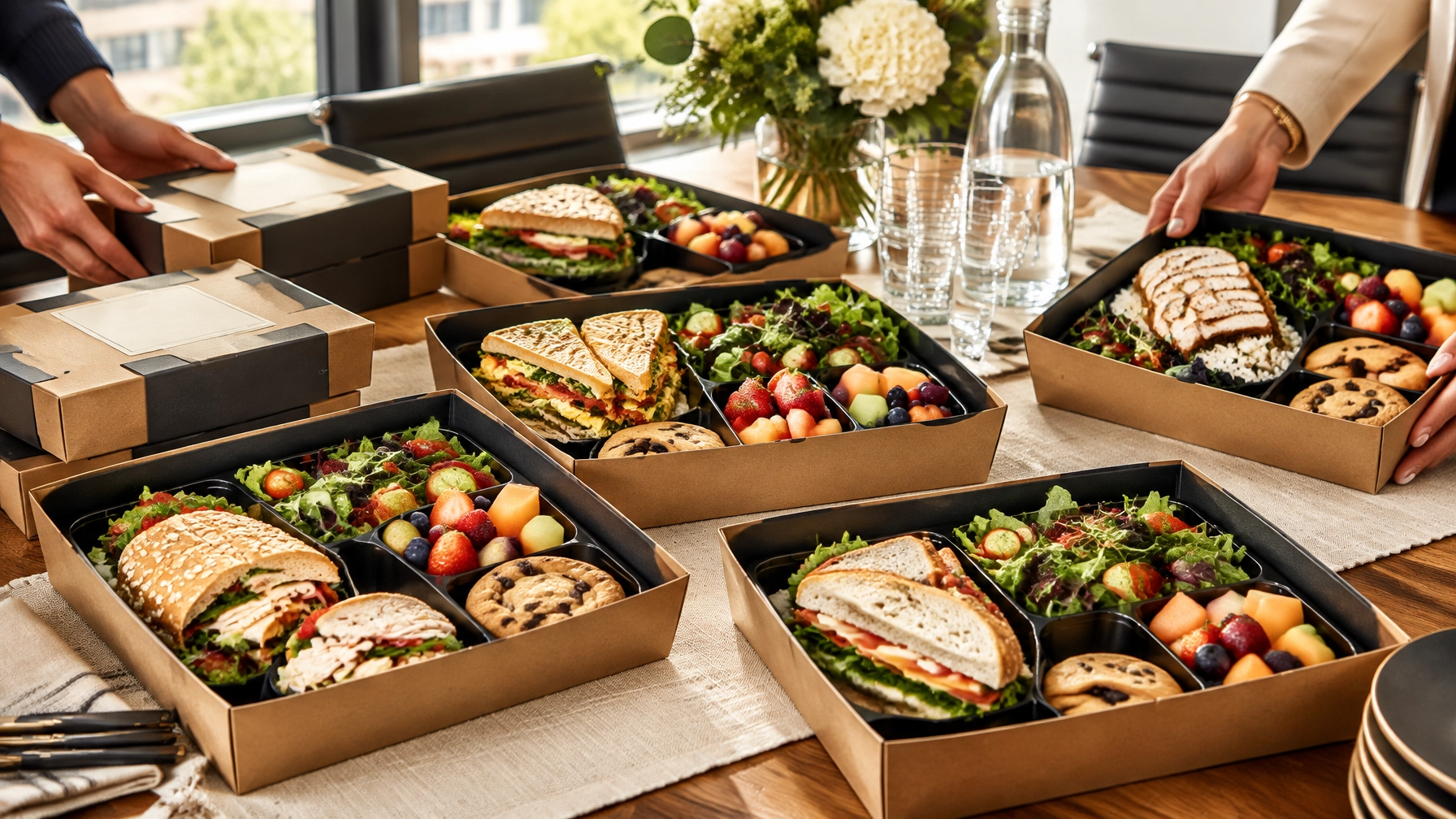
Boxed lunches work well when you need to hand each person a complete meal with minimal setup. They’re especially useful if people will eat at their desks, arrive at different times, or take lunch to another room or location.
Consider boxes for:
- Training sessions with scheduled breaks
- Meetings with staggered arrival or departure times
- Conference rooms where there’s little space for a buffet
- Off-site lunches and pharmaceutical presentations
- Groups with different meal preferences that need clear labeling
With one box per attendee, it’s straightforward to count meals and distribute them. Boxes can also make it easier to separate different meal choices, as long as each one is labeled clearly. For specific allergy concerns, ask about ingredients and handling before placing the order; labels alone can’t answer every food-safety question.
Team Creative Catering offers cold, hot, and salad box lunches. The right choice depends on the meeting, menu, and how guests will eat.

How to decide in 60 seconds
Ask yourself:
- Will everyone eat at the same time? If yes, platters can encourage a shared break. If not, boxes are easier to hand out at different times.
- Is there room to serve? Platters need a table and space for a line. Boxes need a place to arrange or distribute them.
- Does every person need a distinct meal? Boxes make individual choices easier to track.
- Who will manage lunch? Platters need someone to set out serving pieces and keep the area organized. Boxes usually take less hands-on effort.
- Is the group eating on-site? If guests are heading elsewhere, boxed meals are usually simpler to carry.
If you’re planning broader office lunch catering, use these same questions to compare menu formats, timing, and the space available. Our corporate catering page has more information about catering for office meetings and company events.
How much should you order?
For sandwich platters, a useful starting point when sandwiches are the main meal is about 1 to 1½ full sandwiches per person, or roughly 2 to 3 halves per person, especially when you’re offering sides. If sandwiches are the only substantial food and guests have hearty appetites, plan toward the higher end. If there are several other filling dishes, you may need less.
For example, for 20 people, that starting range works out to about 20–30 full sandwiches. Actual platter yields vary, so confirm how many pieces each platter contains and how many people the caterer recommends it serves. Consider a modest buffer only if attendance is uncertain, rather than ordering extra automatically.
For boxed lunches, start with one box per confirmed attendee. If you expect late additions, ask your caterer whether a small number of extra meals makes sense. Check that each box includes the kind of meal your meeting needs, and let the caterer know about dietary requests before the order is finalized.
These are planning estimates, not a substitute for a menu-specific recommendation. Appetite, meeting length, sides, and the number of meal choices all affect the amount to order.
Can you mix platters and boxes?
Yes. A hybrid order can work well when most attendees are comfortable sharing but a few people need a separate labeled meal. For example, you might serve sandwich platters for the group and request individually packed meals for guests with specific dietary preferences or who need to leave early.
Confirm the mix, labeling, and any special food-handling needs with your caterer. Clear labels and a separate spot for individual meals help everyone find the right lunch without slowing down the meeting.
How Team Creative Catering can help
Team Creative Catering has served New Jersey corporations for more than 25 years, with daily corporate deliveries across New Jersey. Based in Edison, we help offices plan meals for groups from 2 to 500, with custom menu options and support for timing and delivery logistics. Corporate house accounts are also available.
Tell us how many people are attending, when lunch will happen, and whether the group will eat together or on a staggered schedule. We’ll help you compare options and provide a quote for your event. Call (732) 563-2227 or email info@cateringnj.com.
Frequently asked questions
How many sandwiches per person should I order for a platter?
As a starting point, allow about 1 to 1½ full sandwiches per person when sandwiches are the main meal and sides are available. The right amount depends on appetite, side dishes, and platter size, so confirm the serving yield when you order.
Are boxed lunches more expensive than sandwich platters?
Not necessarily. The total depends on menu choices, portions, sides, and service details; boxes and platters aren’t directly comparable without those details. Ask for a quote based on your guest count and the meal you have in mind.
Can I mix platters and boxed lunches in one order?
Yes. A mixed order can provide shared platters for most guests and separate labeled boxes for people with different needs or schedules. Share those details when you request a quote.
How far ahead should I order office lunch catering?
Lead time depends on your guest count, menu, date, and delivery details. Contact your caterer as soon as you know the meeting date, especially for larger groups or specialized requests, and confirm the order deadline when you book.